Why does organic chemistry work the way it does? Our research is about finding an answer to this question using a modern twist to classical techniques.
(High-Throughput) Physical Organic Chemistry
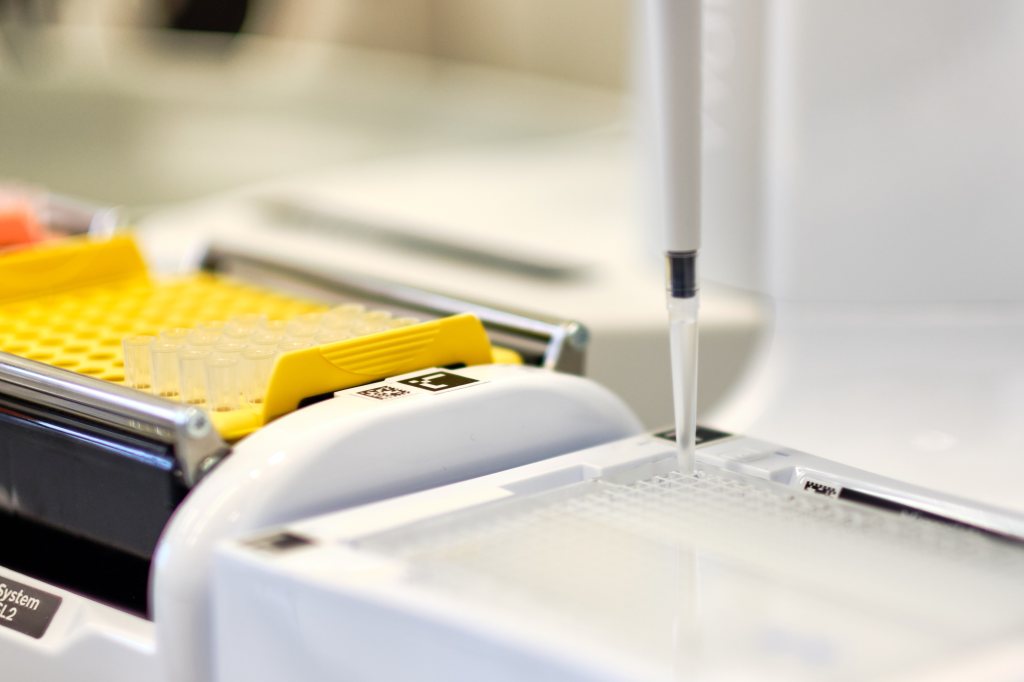
Within organic chemistry, quantitative relationships between rate- and equilibrium constants can provide a rational way to predict novel reactions, classify existing ones, and rationalize the intrinsic properties of reagents. In my current research, I aim to develop tools to predict the outcome of complex catalytic reactions within the context of organic chemistry. Moreover, I aim to replace qualitative comparison of compounds with quantitative metrics toward a reactivity-centered approach to chemistry. In our lab, we thus establish the concept of high-throughput physical organic chemistry, combining robotics and automation to generate large kinetic datasets. This enables us to use the toolbox of computational chemistry and modern data science for achieving predictions and obtaining mechanistic insights.

Mechanistic Prebiotic Chemistry
Explaining how life emerged from simple building blocks is one of the biggest challenges for chemistry and the natural sciences. After decades of experimental research and multiple intriguing discoveries, a generally accepted theory for how and why life emerged from chemistry is still missing. Most existing research on prebiotic chemistry is guided by the anticipation of specific key molecules and focuses on reaction yields. The dynamics of reactions, as well as their mechanism, remain, in most cases, elusive. My approach to prebiotic chemistry takes the tools from physical organic chemistry and catalysis research, which allows testing hypotheses in a quantitative way. Here, we combine high-throughput experimentation, data science, and computations to tackle some of chemistry’s most challenging questions!
For examples of previous work established by Robert on this topic, see: RJM,* Moran,* Angew. Chem. Int. Ed. 2022, 61, e202212237 or RJM,* Moran,* Chem 2024, 10, 2564.

 Mayer lab at Technische Universität München